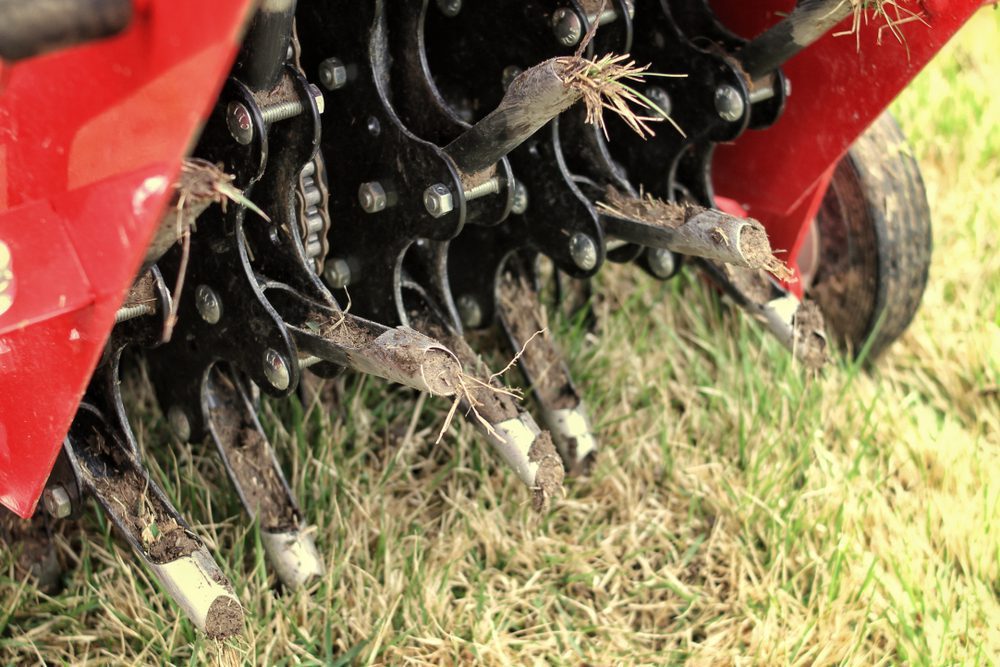

Over time, soil becomes compacted due to heavy foot traffic, lawn equipment, and natural settling. Compacted soil restricts air movement, water absorption, and nutrient availability to the grass roots. Aeration alleviates compaction by creating channels for air, water, and nutrients to penetrate deeper into the soil.
Thatch is a layer of dead grass stems, roots, and debris that accumulates at the soil surface. Excessive thatch prevents water from reaching the roots and provides a breeding ground for pests and diseases.
Aeration helps manage thatch by physically removing it and stimulating microbial activity in the soil.
Aerated soil encourages root growth by providing more space and better access to essential resources.Deeper roots make your lawn more resilient to stressors like temperature extremes and foot traffic.
Compacted soil hinders water absorption, leading to poor drainage and surface runoff.
Aeration facilitates better water penetration, reducing puddling and promoting even moisture distribution.
When soil is aerated, nutrients can penetrate deeper into the root zone. Microbial activity in aerated soil also helps release nutrients, making them accessible to the turf.Improved nutrient availability promotes healthy grass growth and resilience.
Compacted soil hinders water absorption, leading to poor drainage and surface runoff. Aeration facilitates better water penetration, reducing puddling and promoting even moisture distribution.
Soil pH affects nutrient uptake by the grass.
Aeration allows lime or sulfur applications to modify soil pH, ensuring optimal conditions for root development.
Lawns with aerated soil can withstand drought conditions better due to improved water retention and root health.