
Lawn overseeding after winter is necessary when turf damage exceeds the lawn’s ability to recover naturally during the spring growing season. In Edmonton, winter conditions often leave lawns with varying levels of stress, but not all damage requires intervention. The key is identifying whether the grass can regrow on its own or whether density loss has reached a point where overseeding is needed to restore coverage and prevent further decline.
How Edmonton Winters Affect Lawn Health
Winter conditions in Edmonton create several stress factors that affect turf density, root health, and soil structure. These effects vary depending on snow coverage, temperature swings, and how the lawn was maintained before winter.
Snow Mold and Winter Kill
Snow mold develops when grass remains covered under snow for extended periods, especially when the ground has not fully frozen. This creates conditions where fungal activity can damage or weaken turf.
Winter kill occurs when grass does not survive prolonged exposure to cold temperatures, often due to dehydration, lack of insulation, or poor root development going into winter. These areas typically appear as dead patches that do not respond during spring recovery.
Soil Compaction From Freeze–Thaw Cycles
Freeze–thaw cycles cause soil to expand and contract repeatedly. Over time, this process can compress soil layers, reducing airflow and limiting root growth.
Compacted soil restricts how water and nutrients move through the ground, which slows recovery even when temperatures improve. Lawns affected by compaction may appear thin or uneven despite adequate watering and sunlight. In these cases, working with experienced lawn care professionals can help determine whether compaction is limiting recovery.
Signs a Lawn Will Not Recover Naturally in Spring
Not all winter damage requires overseeding. Some lawns will recover naturally as temperatures rise and growth resumes. However, certain indicators suggest that natural recovery will not be sufficient.
Lawns that fail to green up evenly within the early spring growth period often lack the density needed to repair themselves. Patchy areas that remain thin while surrounding turf begins to grow are a strong indication that the existing grass cannot fill in the gaps.
Another key indicator is delayed growth. If sections of the lawn remain dormant significantly longer than others, it suggests underlying damage to the root system rather than temporary stress.
When multiple areas show these patterns, overseeding becomes necessary to restore uniform coverage.
When Overseeding Becomes the Best Solution
Overseeding becomes the best solution when turf density drops below the point where grass can naturally spread and fill in damaged areas. At this stage, introducing new seed helps rebuild coverage and reduce exposure of bare soil.
Thin Turf Coverage After Snow Melt
After snow melt, lawns often appear thinner than expected due to winter stress. If grass coverage is inconsistent across the surface, the lawn may not have enough density to recover without assistance.
Thin turf allows sunlight to reach the soil surface, which creates conditions where weeds can establish before the grass thickens.
Bare Soil Patches That Invite Weeds
Bare soil is one of the clearest indicators that overseeding is required. These areas provide open space for weeds to grow, especially during early spring when conditions favor rapid germination.
Without intervention, these patches often become dominated by unwanted growth, making future lawn recovery more difficult.
Ideal Timing for Overseeding in Edmonton
Timing plays a critical role in whether overseeding is successful. In Edmonton, the climate creates two primary windows where seed establishment is most effective.
Spring Recovery Window
Spring overseeding should be done once the soil has thawed and daytime temperatures begin to stabilize. This period allows seed to establish alongside natural grass growth.
However, early spring conditions can be unpredictable. Cold nights, excess moisture, or delayed soil warming can slow germination and affect results.
Late Summer Seeding Opportunity
Late summer is often a more stable window for overseeding. Soil temperatures are warmer, and weed competition is typically lower than in spring.
This period allows grass to establish before winter, creating stronger turf going into the next season.
Choosing the right timing depends on how severe the winter damage is and whether immediate repair is needed or if waiting will produce more consistent results.
When Overseeding Will Not Fix the Problem
Overseeding is not effective in all situations. If the underlying issue affecting the lawn is not addressed, new seed may fail to establish or produce the same thin results.
Severely compacted soil, poor drainage, or low-quality soil conditions can prevent seed from developing properly. In these cases, overseeding without correcting the soil environment leads to repeated failure.
Heavy shade is another limiting factor. Grass that struggles to grow due to lack of sunlight will not improve significantly through overseeding alone.
When these conditions are present, the focus should shift to correcting the underlying issue before introducing new seed. If the lawn continues to decline despite corrective efforts, you can contact a local landscaping team to assess site conditions and recommend the appropriate solution.
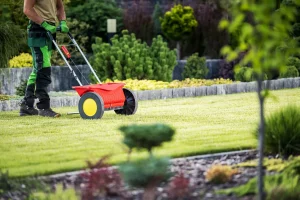
Preparing Lawns for Successful Overseeding
Proper preparation determines whether overseeding improves lawn density or produces inconsistent results. Without preparation, seed may not reach the soil or may fail to establish evenly.
| Preparation Step | Purpose | Impact on Seed Establishment |
|---|---|---|
| Aeration | Relieves compaction and improves airflow | Allows seed to contact soil and supports root growth |
| Thatch removal | Reduces surface barriers | Improves water and nutrient penetration |
| Soil leveling | Corrects uneven areas | Promotes consistent seed distribution |
| Surface loosening | Creates seed-to-soil contact | Increases germination success |
These steps create conditions where seed can establish effectively rather than competing against existing limitations.