
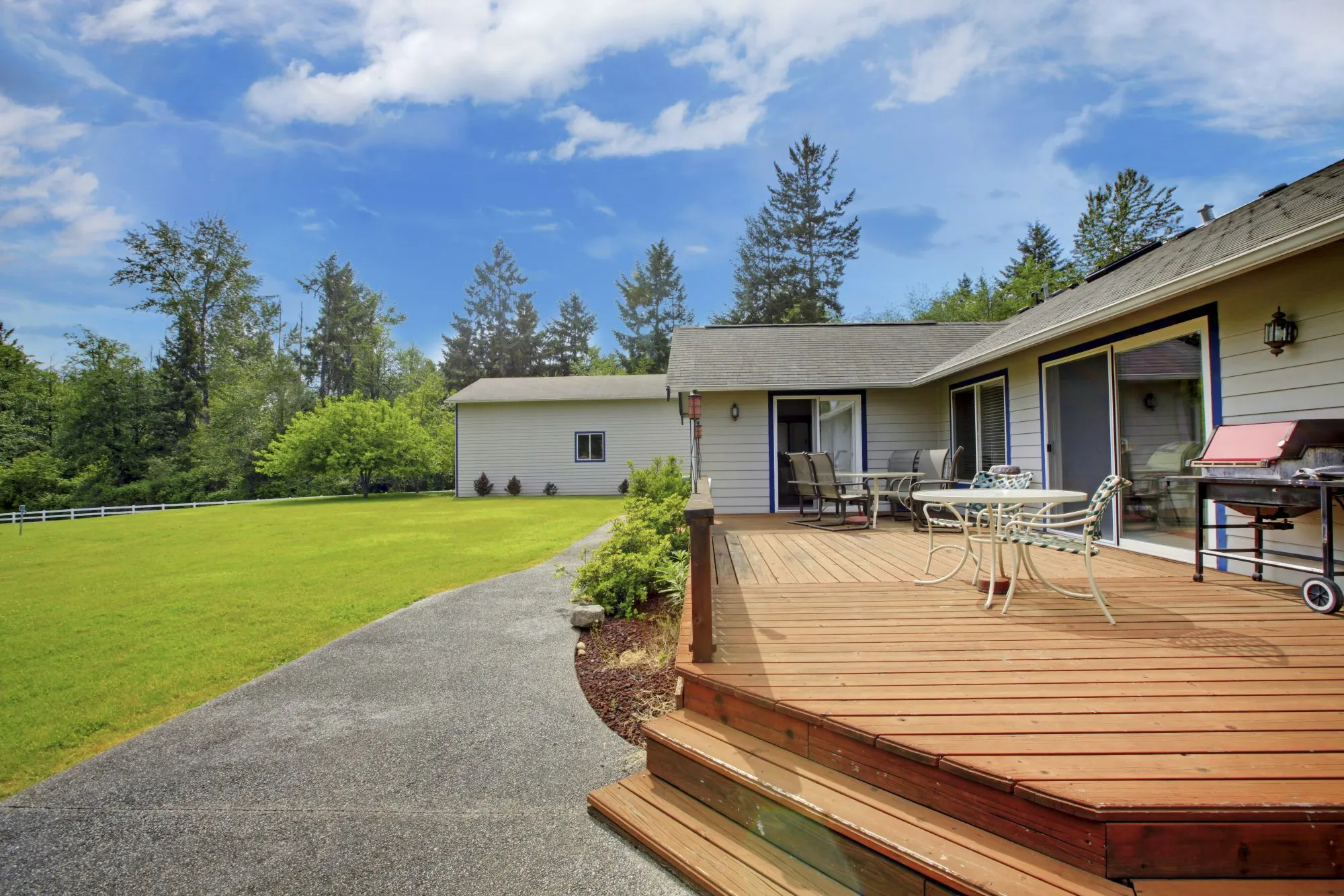
A backyard deck is one of the most common outdoor investments Edmonton homeowners consider, but its value depends heavily on the property, the neighbourhood, and how the yard is currently used. Decks do not add equal value in every situation. Understanding when they deliver the strongest return, in both resale and daily usability, helps homeowners make a more informed decision before committing to a project. Landsharx builds decks in Edmonton as part of broader landscaping projects, integrating the structure into the overall yard design rather than treating it as a standalone addition.
Why Decks Influence Property Value and Buyer Appeal
Outdoor living space has become a meaningful factor in how buyers evaluate residential properties. A deck extends the functional square footage of a home into the yard, creating usable space for dining, entertaining, and everyday relaxation that an unimproved yard cannot offer in the same way.
In Edmonton’s climate, where usable outdoor months are limited, buyers place a premium on outdoor spaces that are immediately functional. A well-built deck signals that the outdoor area has been developed intentionally, which reduces the perceived work a buyer needs to do after purchase. Properties with no outdoor living structure often require buyers to budget for one themselves, which factors into their offer.
Decks also photograph well in listings, which affects the volume of showings a property generates before an offer is made. An outdoor living space that reads as an extension of the home’s interior, rather than an afterthought, contributes to first impressions in ways that are difficult to quantify but consistent across buyer behaviour.
Properties Where Decks Deliver the Most Value
Not every yard benefits equally from a deck. The properties where decks add the most value share a few common characteristics:
- Homes without existing outdoor living structures. A property with no deck, patio, or defined outdoor space gains the most from adding one. Buyers shopping in mid-range and upper-mid-range Edmonton neighbourhoods increasingly expect some form of developed outdoor living area.
- Properties with elevated or sloped backyards. A deck is often the most practical way to create usable flat space above a sloped grade. Without a deck, a sloped yard is visually present but functionally unusable for seating, dining, or entertaining.
- Homes where the main floor is elevated above grade. A deck that bridges the interior floor level to the yard makes the outdoor space feel like a natural extension of the home. Where a back door opens to a steep drop or an awkward staircase to ground level, a deck resolves the transition and improves both usability and appearance.
- Properties in neighbourhoods where decks are standard. In areas where most comparable homes have decks, a property without one reads as under-improved relative to the market, which can suppress its value or extend time on market.
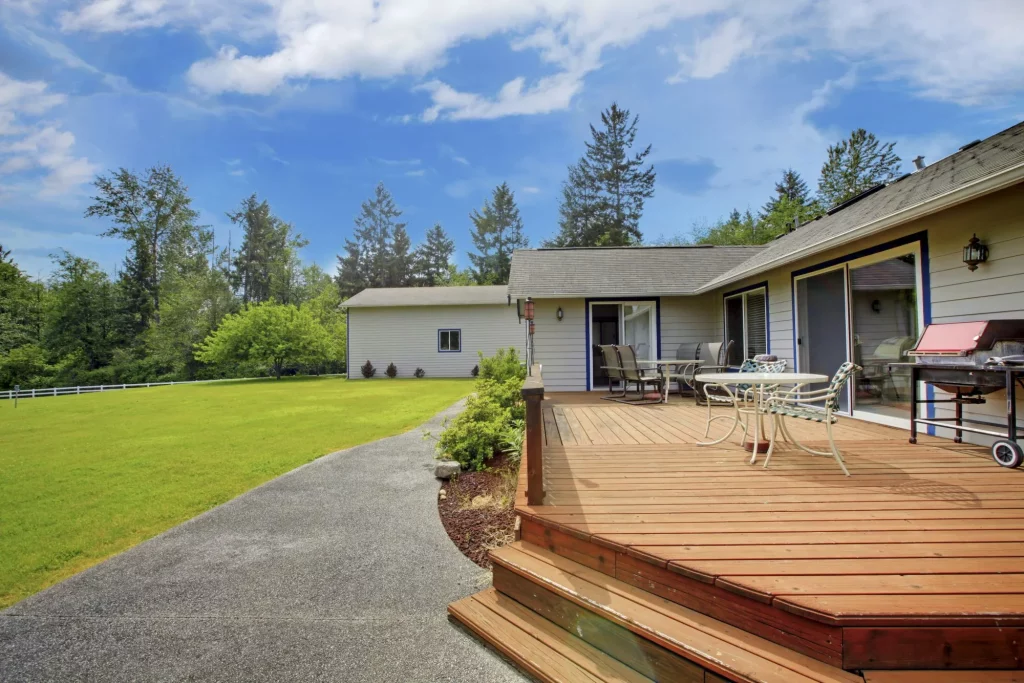
Situations Where a Deck Improves Everyday Usability
Resale value is not the only measure of a deck’s worth. For homeowners who plan to stay in their property for several years, usability improvements can justify the investment independently of what the deck adds at resale.
Expanding Small Backyard Living Space
In Edmonton’s newer subdivisions, lot sizes are often modest and backyard depth is limited. A deck defines a clear outdoor living zone without consuming the remaining yard space the way a ground-level patio might. Elevated decks in particular preserve the yard beneath them, which can be used for storage, landscaping, or utility access.
For small yards, a well-proportioned deck creates the perception of a more complete outdoor space even when the total square footage has not changed.
Creating Functional Outdoor Dining Areas
A flat, level deck surface is the most practical base for outdoor dining furniture. Uneven grass or gravel does not support furniture stability in the same way, and ground-level surfaces without a defined structure tend to feel provisional rather than intentional. A deck gives an outdoor dining area the same functional permanence as an indoor room, which changes how often homeowners actually use the space.
In Edmonton, where the outdoor dining season runs from May through September, a functional and accessible outdoor dining area adds consistent daily value during that window.
Improving Yard Access From the Home
Where a home’s back door opens awkwardly to the yard, a deck resolves the transition. This is particularly relevant for homes with elevated main floors where steps to grade are steep, narrow, or positioned in a way that limits traffic flow. A deck at door level creates a natural landing that makes moving between indoors and outdoors easier, which directly increases how often the outdoor space is used.
When a Deck May Not Add Significant Value
A deck does not deliver strong value in every scenario. Homeowners should weigh these conditions carefully before proceeding.
Where the property already has a developed outdoor living space, a patio, existing deck, or covered outdoor room, adding a second structure rarely adds proportional value. Buyers do not typically pay a premium for redundant outdoor spaces, and the additional cost is unlikely to be recovered at resale.
In neighbourhoods where comparable homes do not have decks, the addition may not influence buyer behaviour or pricing in a measurable way. Value is relative to market expectations. A deck in a neighbourhood where none of the comparable properties have them may improve usability without affecting resale price.
Very large decks that consume most of the usable backyard can reduce buyer appeal by eliminating the green space that many buyers want. A deck that dominates the yard leaves little room for children’s play, gardens, or other outdoor uses, and buyers with families or outdoor lifestyle interests may see it as a limitation rather than an asset.
Cost vs Value Expectations for Deck Projects
Deck projects vary significantly in cost depending on size, materials, and complexity. Return on investment at resale is not guaranteed and depends on the factors covered above.
| Factor | Lower Value Return | Higher Value Return |
|---|---|---|
| Neighbourhood deck prevalence | Decks uncommon in area | Decks standard in comparable homes |
| Existing outdoor structures | Patio or deck already present | No developed outdoor living space |
| Yard grade | Flat yard, deck optional | Sloped or elevated, deck resolves grade |
| Deck size relative to yard | Oversized, consumes yard | Proportional to lot and home size |
| Construction quality | Basic or visibly dated | Well-built, integrated with home design |
| Buyer demographic | Buyers prioritizing other features | Buyers prioritizing outdoor living |
Most industry estimates place deck return on investment at resale between 60% and 80% of construction cost for well-matched properties. That range drops in situations where the deck adds to an already-developed outdoor space or exceeds what the neighbourhood market supports.
The usability return, the daily value the deck adds while the homeowner remains in the property, is a separate calculation that often justifies the investment even when the resale return alone would not.
When Homeowners Choose Decks as Part of a Larger Landscape Upgrade
A deck built in isolation without consideration of the surrounding yard often underperforms its potential. When a deck is integrated into a broader landscaping plan, the combined result tends to be more functional and more visually cohesive than either element would be on its own.
Common combinations include decks with adjacent retaining walls that level the grade below or beside the structure, decks paired with sod or landscaping that extends the visual line of the outdoor space, and decks positioned to connect with fencing or privacy screening that defines the outdoor room. Each of these additions reinforces the deck’s function rather than leaving it as a platform in an otherwise unfinished yard.
Homeowners undertaking a full backyard renovation typically see stronger combined value from treating the deck and the surrounding landscape as one project rather than phasing them independently.
Planning a Deck That Fits the Yard with Landsharx
A deck adds the most value when it is sized and positioned to suit the specific property, not built to a standard template. Landsharx handles deck construction in Edmonton alongside full landscaping services, which means the deck design is developed in the context of the whole yard rather than independent of it. Homeowners considering a deck as part of a broader outdoor upgrade can have both scoped together to ensure the result is functional, proportional, and consistent with the property’s value and layout.