Power raking and aeration solve different lawn problems, even though both are commonly recommended for improving turf health. Knowing which condition is affecting your Edmonton lawn helps avoid unnecessary work and reduces the risk of stressing healthy grass. LandSharx helps homeowners determine whether the primary issue is excessive thatch, compacted soil, or a combination of both before recommending the appropriate treatment.
The Two Different Lawn Problems These Services Solve
Power raking and aeration are often confused because they are both performed on established lawns, but they target different parts of the lawn system.
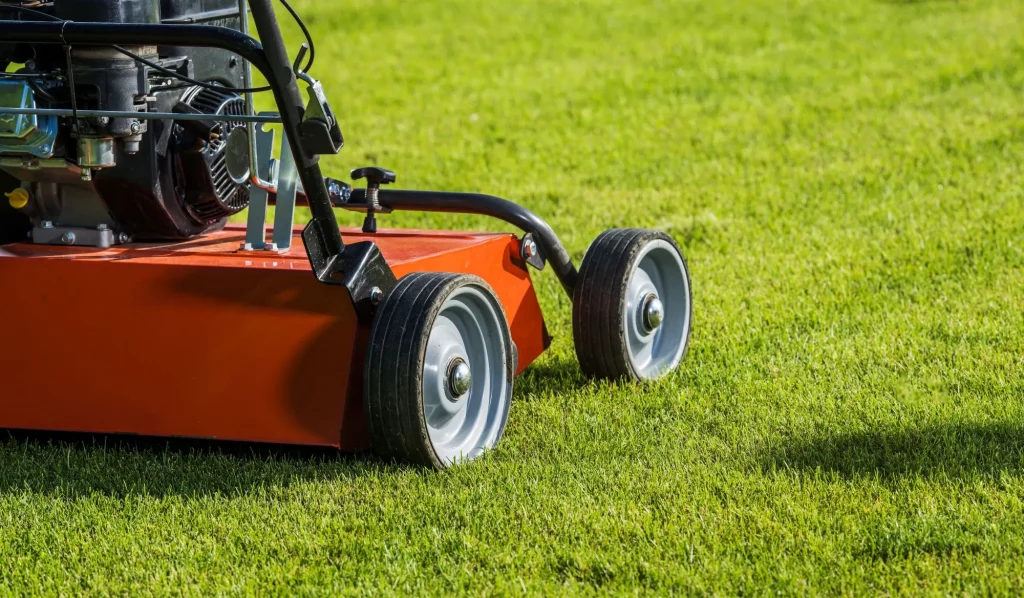
Power raking removes excess thatch that has accumulated between the grass blades and the soil surface. Aeration relieves soil compaction by creating openings that allow air, water, and nutrients to move into the root zone.
These conditions can develop independently or at the same time. Excessive thatch does not automatically cause soil compaction, and compacted soil does not necessarily create excessive thatch. A lawn may have one of these problems or both. Treating the wrong issue may provide little benefit and can place unnecessary stress on the turf.
What Power Raking Fixes in a Lawn
Power raking is intended to remove excessive thatch that prevents the lawn from functioning properly. A thin layer of thatch is normal and helps protect the soil while insulating roots from temperature changes. Problems develop when that layer becomes thick enough to restrict the movement of water, nutrients, and air into the soil.
Thatch Buildup That Blocks Water and Nutrients
Thatch is a layer of partially decomposed stems, roots, and organic material that forms between the grass and the soil surface. When that layer becomes too thick, irrigation and rainfall may not reach the soil efficiently, while fertilizer remains trapped above the root zone.
Excessive thatch can develop when grass produces organic material faster than it naturally decomposes. Vigorous turf growth, repeated heavy fertilization, and conditions that slow decomposition can all contribute to thicker thatch over time.
Power raking removes much of this excess material so moisture and nutrients can reach the soil more effectively. It is intended for lawns with significant thatch buildup rather than lawns experiencing unrelated problems such as soil compaction or poor drainage.
Lawns That Feel Spongy or Matted
One of the most recognizable signs of excessive thatch is a lawn that feels soft, springy, or matted when walked on. Grass may also appear uneven because living shoots are growing on top of accumulated organic material instead of directly from the soil.
Temporary flattening after winter snow cover or prolonged rainfall is different from a lawn that remains persistently matted because of excessive organic buildup. A spongy lawn does not automatically mean power raking is required. Moist soil, certain grass varieties, or localized organic buildup can create similar conditions, making an assessment important before selecting treatment.
What Aeration Fixes in a Lawn
Aeration improves growing conditions below the lawn surface by relieving compacted soil. Unlike power raking, it does not remove thatch and should not be expected to correct excessive organic buildup.
Rather than directly repairing damaged grass, aeration improves the soil environment so roots can expand more easily and the lawn can recover through healthier future growth.
Soil Compaction Preventing Root Growth
Compacted soil contains fewer open spaces for air, water, and root expansion. This commonly develops in areas with frequent foot traffic, heavy equipment, repeated mowing patterns, or naturally dense soils.
Aeration removes small soil cores that create pathways into the root zone. These openings improve oxygen exchange, water movement, and root development while reducing the effects of compaction over time.
Routine aeration improves many compacted lawns, but severely compacted soil or underlying site conditions may require additional corrective work before healthy root growth can fully return.
Poor Drainage and Hard Soil Conditions
Hard soil that is difficult to penetrate often indicates compaction rather than excessive thatch. Water may run across the surface or remain shallow because it cannot move easily into the soil profile.
Aeration can improve infiltration where compaction is the primary cause. It is not intended to correct drainage problems created by poor grading, low areas, or broader site drainage conditions. In those situations, aeration alone may not fully resolve the issue.
How to Identify the Problem in Your Own Lawn
The symptoms of thatch buildup and soil compaction can sometimes look similar, especially when a lawn is thinning or struggling to recover. Looking at how the lawn feels, how water behaves, and where the problem occurs can help identify the most likely cause before selecting a treatment.
| Symptom | Likely Cause | Recommended Treatment |
| Lawn feels soft or springy | Excessive thatch | Power raking |
| Water sits on hard soil before soaking in | Soil compaction | Aeration |
| Grass struggles despite regular watering | Thatch or compaction, assessment may be needed | Inspect before treatment |
| Soil is difficult to penetrate | Soil compaction | Aeration |
| Thick organic layer between grass and soil | Excessive thatch | Power raking |
| Lawn has both heavy thatch and compacted soil | Combined conditions | Power raking and aeration |
The table should be used as a guide rather than a definitive diagnosis. Looking at the overall pattern of symptoms generally provides a more accurate assessment than relying on a single observation. Where multiple symptoms overlap, further assessment may be appropriate because excessive thatch and soil compaction can occur together.
Situations Where Both Services May Be Needed
Some Edmonton lawns develop both excessive thatch and compacted soil. This is more common in mature lawns that have received regular mowing for many years without periodic renovation.
In these situations, removing excessive thatch alone does not relieve compacted soil, while aeration alone leaves the organic barrier intact. Addressing both conditions allows water, nutrients, and oxygen to move more effectively from the surface into the root zone.
The order of treatment depends on lawn condition and the amount of thatch present. Lawns with significant thatch buildup may benefit from power raking before aeration so the soil can be reached more effectively. Where thatch is minimal, aeration alone may be sufficient.
Whether both services should be completed during the same season depends on lawn condition, turf health, and the amount of stress the grass can tolerate.
When Each Service Is Typically Done in Edmonton Lawns
Both services are commonly scheduled during periods of active grass growth so the lawn can recover more efficiently. In Edmonton, this typically means spring or early fall for cool-season grasses.
Although both services are often performed during similar seasons, they are not automatically scheduled together. The appropriate timing depends on the lawn’s condition, recovery needs, weather, soil moisture, and the severity of the underlying problem. Performing either service during periods of drought, extreme heat, or dormant growth can increase stress and slow recovery.
Why Choosing the Wrong Treatment Can Damage Turf
Selecting the wrong treatment often means the underlying problem remains while the lawn experiences unnecessary stress. Power raking removes organic material and can thin healthy turf if excessive thatch is not actually present.
Aeration provides little improvement when excessive thatch is preventing water and nutrients from reaching the soil surface. Likewise, power raking cannot relieve compacted soil that restricts root growth beneath the surface.
In most cases, choosing the wrong service does not permanently damage a healthy lawn. More commonly, it creates unnecessary stress, delays recovery, and leaves the original problem unresolved until the correct treatment is performed.
LandSharx assesses lawn conditions before recommending power raking, aeration, or a combination of both, helping Edmonton homeowners choose the treatment that matches the actual cause of lawn decline.