Lawn disease often begins with subtle changes that are easy to mistake for drought, mowing stress, or uneven growth. Recognizing early warning signs allows Edmonton homeowners to respond before larger areas of turf are affected. LandSharx helps identify when lawn decline is likely related to disease and when routine lawn care or professional intervention is the more appropriate response.
Why Lawn Diseases Develop in Edmonton Yards
Most lawn diseases develop when naturally occurring fungi that are already present in the lawn become active under favourable environmental conditions. Disease is rarely caused by a single factor. It is more commonly the result of moisture, temperature, airflow, soil conditions, and overall lawn health combining to create conditions that allow fungal growth to increase.
Healthy lawns are not immune to disease. However, healthy turf generally has greater resistance to infection and is more likely to recover successfully than grass already weakened by environmental stress.
Subtle Lawn Changes That Often Appear First
Lawn disease usually begins with small visual changes before larger sections of turf become affected. Early symptoms often appear in isolated patches rather than across the entire lawn. Watching for gradual changes over several days is often more useful than reacting to a single discoloured area, since temporary stress can produce similar symptoms.
Discolored Patches That Continue Expanding
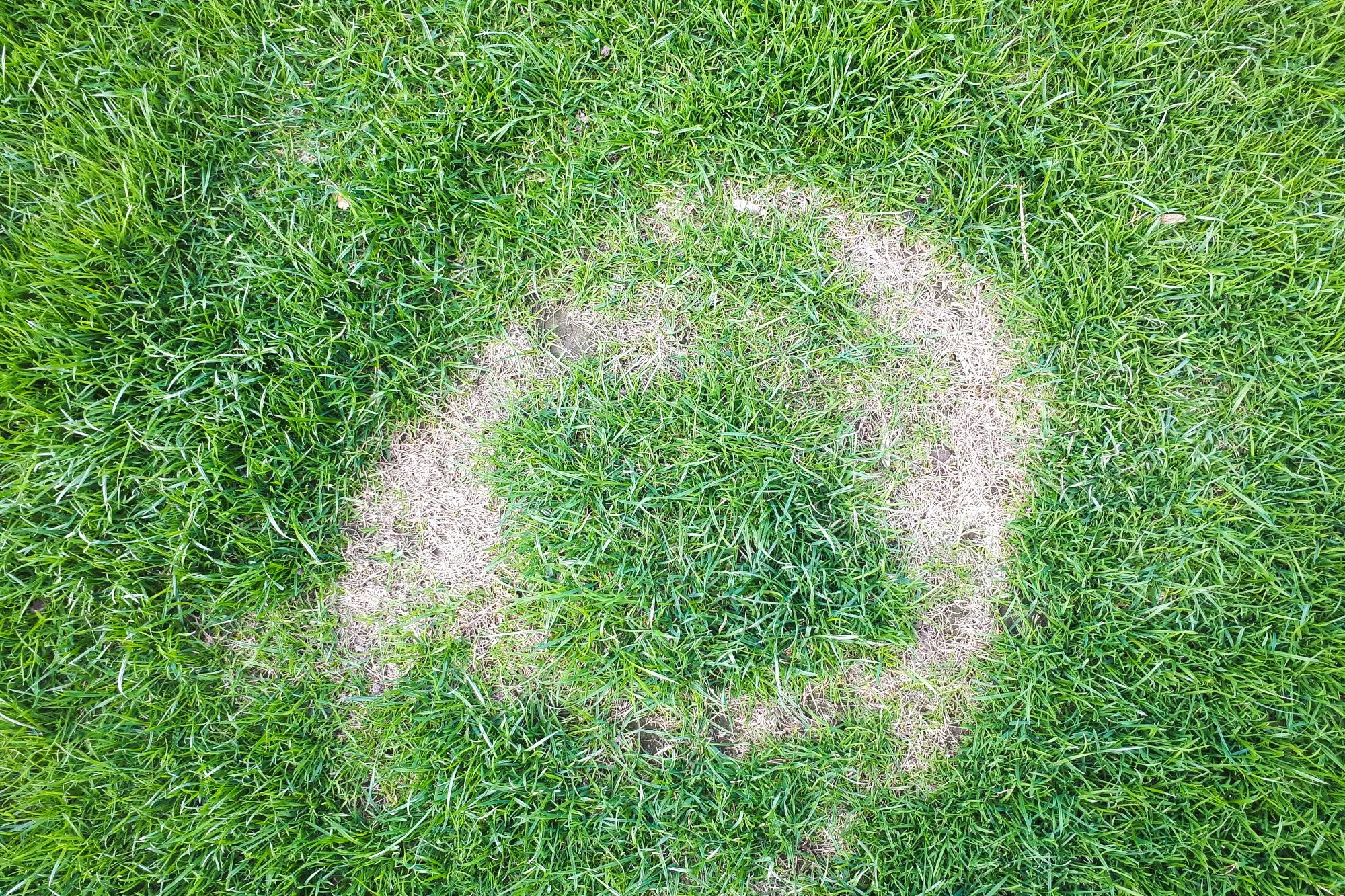
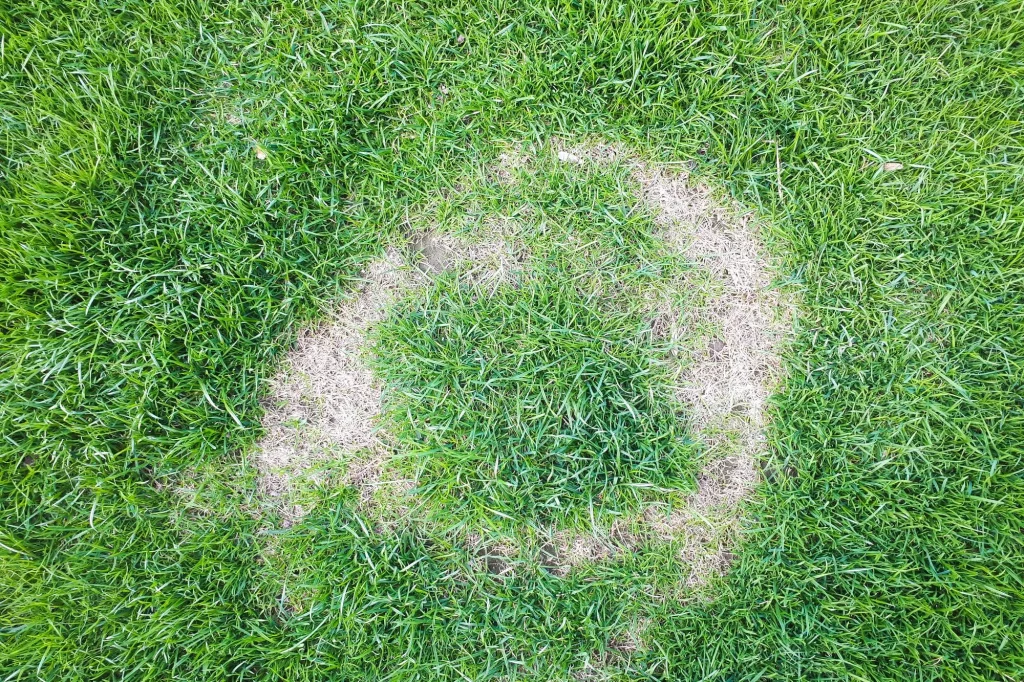
One of the earliest warning signs is a patch of grass that changes colour and slowly increases in size. Areas may appear yellow, light brown, straw coloured, or darker than surrounding turf depending on environmental conditions and the type of disease involved.
Unlike damage caused by temporary drought or mowing, disease-related patches often continue expanding even after watering or normal lawn maintenance resumes. Continued enlargement over several days despite suitable growing conditions and routine care generally warrants closer assessment. Consistent expansion is a more useful indicator than colour alone.
Grass Blades Showing Spots, Rings, or Powdery Growth
Disease may also appear directly on individual grass blades. Small spots, circular patterns, fine powdery growth that remains attached to the grass blades, or unusual markings can develop before widespread thinning becomes noticeable.
These symptoms are not unique to one specific disease, and they can occasionally resemble environmental damage or residue left by other conditions. Persistent changes affecting multiple areas of the lawn generally warrant closer evaluation than isolated blades showing temporary discoloration.
Patterns That Suggest Disease Rather Than Normal Lawn Stress
Normal lawn stress usually follows a predictable cause, such as heat, drought, heavy traffic, or inconsistent irrigation. Once that condition improves, the lawn often begins recovering without continued decline.
Disease is more likely when affected areas continue spreading despite appropriate watering and maintenance, when patches expand outward from initial problem areas, or when symptoms develop alongside visible changes on individual grass blades. By comparison, drought or irrigation problems often follow predictable exposure patterns rather than gradually spreading outward. No single symptom confirms disease, but several occurring together increase the likelihood that fungal activity is involved.
Environmental Conditions That Trigger Turf Disease
Environmental conditions influence how easily lawn disease develops. Disease pressure typically increases when moisture remains on the lawn for extended periods and overall turf health declines.
Excess Moisture and Poor Drainage
Grass that remains wet for prolonged periods creates favourable conditions for fungal activity. Frequent rainfall, excessive irrigation, shaded areas that dry slowly, and poor drainage can all extend surface moisture long enough for disease to spread more easily.
Short periods of wet weather do not automatically cause lawn disease. The risk generally increases when moisture remains on the lawn for extended periods while other favourable environmental conditions are also present.
Poor drainage does not automatically create lawn disease, but persistent moisture increases the likelihood that fungal organisms will become active when other contributing factors are present.
Dense Thatch and Limited Airflow
Heavy thatch can trap moisture near the soil surface while reducing airflow through the turf canopy. Thick organic layers slow evaporation, allowing the lawn surface to remain damp longer than surrounding areas. Areas surrounded by dense vegetation or receiving limited sunlight may also dry more slowly.
These conditions do not directly create disease, but they can support fungal development by slowing drying and reducing air circulation around the grass.
Nutrient Imbalances in the Soil
Grass that is deficient in essential nutrients or receives excessive fertilizer may become more vulnerable to disease. Both nutrient deficiencies and excessive nitrogen can increase disease susceptibility under certain environmental conditions by weakening turf or encouraging excessive growth.
Nutrient imbalances alone do not confirm disease, but maintaining balanced fertility supports healthier growth and reduces environmental stress that may contribute to disease development.
When Lawn Disease Starts Spreading Quickly
Some lawn diseases remain localized while environmental conditions are changing. Others can expand rapidly once moisture, temperature, and humidity become consistently favourable.
Rapid spread is more concerning when patches continue enlarging over consecutive days, multiple affected areas begin appearing across the lawn, or healthy surrounding turf starts showing similar symptoms. As disease expands, routine maintenance alone becomes less likely to stop further progression. Waiting for widespread damage before responding often limits the effectiveness of corrective lawn care.
How Early Lawn Care Intervention Can Limit Damage
Early intervention focuses on reducing the environmental conditions that allow disease to continue spreading while supporting healthier turf recovery. Improving drainage, reducing prolonged surface moisture, managing thatch, and correcting cultural lawn care practices may help limit further decline where disease is the likely cause.
Not every lawn showing discoloration requires aggressive treatment. The appropriate response depends on whether disease is the most likely explanation or whether another issue, such as drought stress, compaction, or drainage problems, is responsible. Early assessment helps determine whether normal lawn recovery is likely or whether disease-related stress requires additional attention before larger sections of turf decline.
When Professional Lawn Assessment Is Recommended
A professional assessment is appropriate when lawn discoloration continues spreading despite normal watering and maintenance, when symptoms repeatedly return under similar weather conditions, or when multiple disease indicators appear at the same time.
Because many lawn problems produce similar symptoms, a visual inspection alone does not always identify the exact cause. A professional assessment identifies the most likely contributing factors and determines whether disease is more consistent with the observed symptoms than environmental stress, drainage problems, compaction, or other lawn conditions. It does not necessarily provide a laboratory-confirmed diagnosis of a specific disease.
LandSharx evaluates Edmonton lawns to determine whether the decline is more consistent with disease, environmental stress, drainage issues, compaction, or other underlying lawn conditions before recommending the next step.