
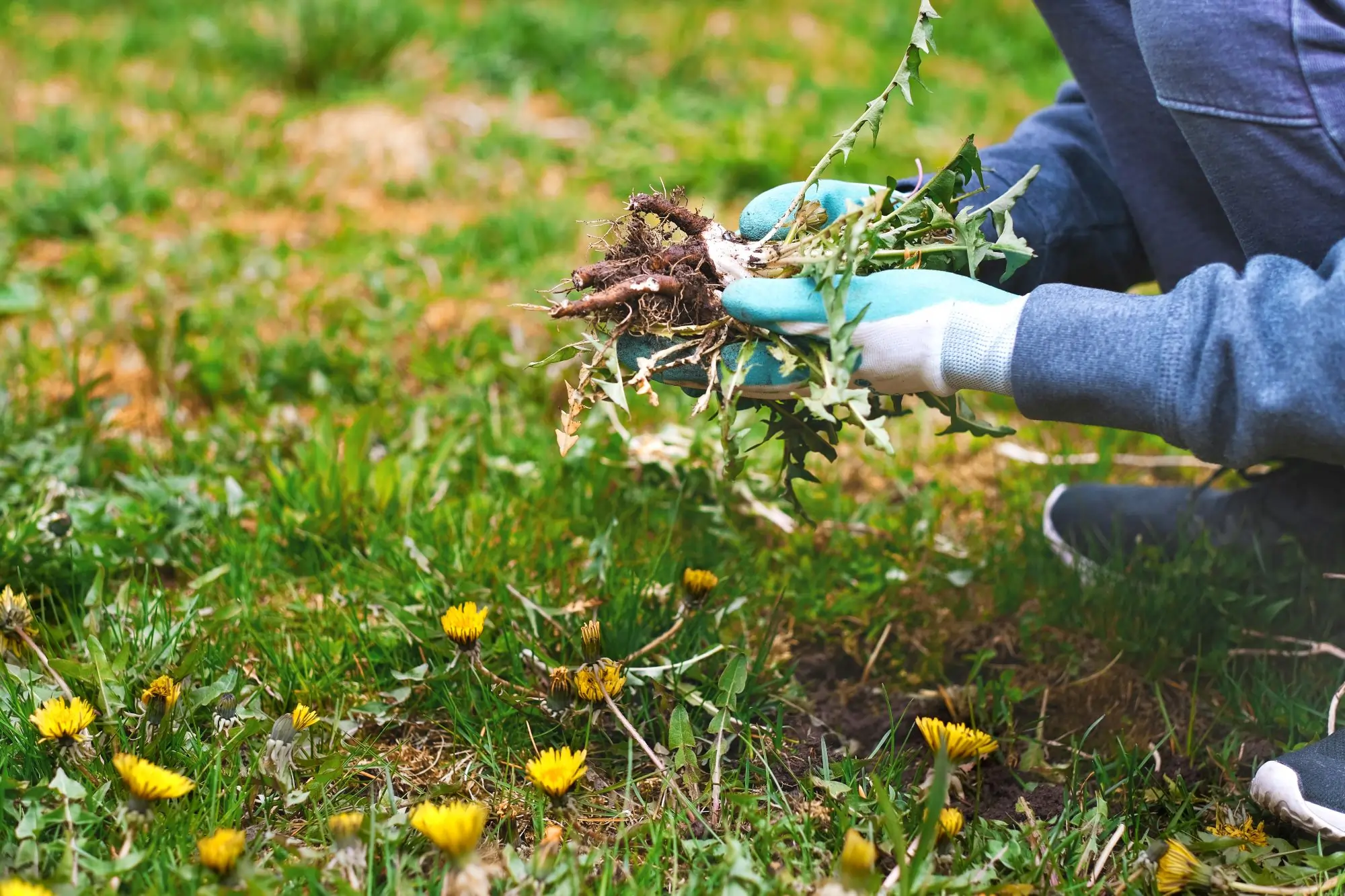
Weeds take over lawns in Edmonton when grass loses its ability to compete for space, nutrients, and moisture across a meaningful portion of the yard. This typically becomes noticeable when weeds begin spreading beyond isolated patches and start displacing turf across multiple areas. Even lawns that are regularly maintained can develop weed problems when underlying conditions such as soil imbalance, compaction, or inconsistent moisture weaken grass performance. Landsharx focuses on identifying these root causes, since weed growth is usually a symptom of deeper lawn health issues rather than the primary problem.
Why Healthy Lawns Naturally Resist Weed Growth
Healthy lawns resist weeds by forming dense turf that blocks sunlight from reaching the soil surface and limits the space available for weed seeds to establish. Thick grass also absorbs most available nutrients and moisture, reducing the resources weeds need to grow.
Root systems also play a role. Grass roots form a consistent network near the surface, while many weeds either grow quickly in shallow soil or extend deeper roots to access moisture during stress periods. This allows weeds to take advantage of weak turf conditions.
Weeds can still appear in healthy lawns under certain conditions, such as when aggressive species spread from nearby areas or when seeds are introduced through wind or foot traffic. However, strong turf typically limits how far they can spread.
Common Conditions That Allow Weeds to Spread
Weeds spread when grass weakens or when lawn conditions create openings for new growth. These conditions often develop gradually and can overlap.
Inconsistent watering is a common factor. Lawns that receive uneven moisture may develop dry or stressed areas where grass thins and weeds establish more easily.
Weak Turf From Nutrient Deficiency
Grass weakens when it lacks essential nutrients or when nutrients become imbalanced. Both deficiency and excess can affect turf performance.
Lawns with poor nutrient balance often appear uneven in color and growth. Weak turf cannot compete effectively, allowing weeds to establish in these areas.
Over-fertilization can also contribute to weed growth by creating uneven or excessive top growth that weakens root systems.
Soil Compaction That Prevents Grass Growth
Compacted soil restricts root growth and limits the movement of water, air, and nutrients. Grass struggles to establish in these conditions, while some weeds adapt more easily due to flexible root structures.
Compaction can vary across a lawn, often appearing in high-traffic areas. This creates uneven growth patterns where weeds spread in compacted sections while grass performs better elsewhere.
Improper Mowing Height
Mowing too short reduces grass health by limiting photosynthesis and weakening root systems. This exposes soil to sunlight and increases the likelihood of weed seed germination.
For most Edmonton lawns, maintaining a mowing height of approximately 2.5 to 3 inches supports healthier turf. Mowing frequency also matters. Cutting too infrequently can stress the lawn, while cutting too aggressively at once can weaken it further.
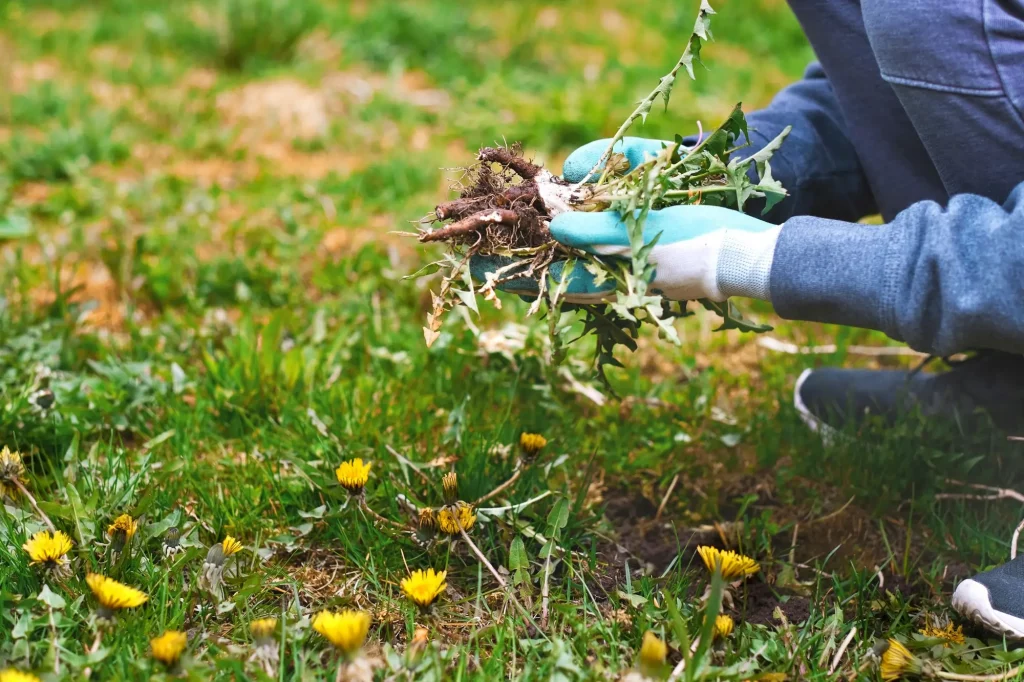
Environmental Factors That Encourage Weed Growth in Edmonton
Edmonton’s climate creates seasonal conditions that can favor weeds when turf is already under stress.
Freeze-thaw cycles can shift soil structure and disrupt root stability. This movement can create small gaps in the turf where weeds can establish.
Weed growth patterns also vary by season. Some weeds establish early in spring, while others spread more aggressively during summer stress periods.
Short Growing Seasons
Short growing seasons limit the time grass has to establish and recover. In Edmonton, this window typically runs from late spring through early fall, which restricts how quickly turf can thicken.
Weeds can take advantage of this shorter window by establishing quickly during early growth periods before grass fully recovers.
Spring Moisture and Summer Stress
Spring moisture creates ideal conditions for weed seed germination. Weeds often establish earlier than grass, giving them a competitive advantage at the start of the season.
Summer stress from heat or drought can weaken grass further, especially in areas with poor soil or inconsistent watering. This allows weeds that tolerate stress conditions to expand.
Soil Composition Challenges
Many Edmonton lawns sit on clay-heavy soil, which affects both drainage and oxygen availability. Clay soils retain water but limit airflow to roots, which restricts grass growth.
These conditions can create an environment where grass struggles to establish strong roots, while certain weeds tolerate lower oxygen levels more effectively.
How Lawn Maintenance Habits Influence Weed Takeover
Maintenance habits directly influence turf strength and weed resistance. Inconsistent practices often create conditions that allow weeds to spread. Mowing frequency plays a role alongside height. Cutting too infrequently and removing too much grass at once can stress the lawn and reduce density.
Inconsistent Fertilization
Irregular fertilization leads to uneven growth and weak turf coverage. Timing also matters. Applying nutrients too early or too late in the season can reduce effectiveness and allow weeds to compete more easily.
Consistent and properly timed fertilization supports steady grass growth and improves resistance to weed spread.
Lack of Aeration or Dethatching
Aeration helps relieve soil compaction and allows air, water, and nutrients to reach the root zone. It is typically needed when soil shows signs of compaction, such as pooling water or reduced growth in high-traffic areas.
Thatch buildup can block moisture and nutrients from reaching the soil. Without aeration or dethatching when needed, turf weakens and weeds gain an advantage.
Allowing Bare Soil to Remain Exposed
Bare soil creates ideal conditions for weed establishment. Weed seeds can germinate quickly in exposed areas, often within days under favorable conditions.
Filling these areas promptly with grass reduces the opportunity for weeds to take hold. Leaving them untreated allows weeds to establish and spread into surrounding turf.
Early Warning Signs Weeds Are About to Spread
The following signs indicate weakening turf and increased risk of weed spread:
- Thinning grass with visible soil between blades that persists beyond normal seasonal variation
- Uneven color or patchy growth that does not recover during the growing season
- Areas that remain compacted or waterlogged after rainfall
- Slow recovery after mowing or stress events compared to healthy sections
- Isolated weed patches that begin to expand outward into surrounding turf
These signs help distinguish temporary stress from long-term decline, especially when conditions do not improve over time.
Preventing Weed Takeover Through Strong Turf Growth
Preventing weed takeover requires a combined approach that supports soil health, proper mowing, consistent watering, and balanced nutrient management. Addressing only one factor rarely produces lasting results.
Weed prevention focuses on reducing conditions that allow weeds to establish rather than eliminating them entirely. Some weed presence is normal, but strong turf limits their ability to spread.
Consistent watering typically means applying enough water to reach the root zone while avoiding shallow, frequent watering that weakens root systems. When grass remains dense and healthy, it naturally reduces available space and resources for weeds.